Royal Kingdom
- 4.6
- Rating
- 100.00M
- Installs
- Free
- Price
 Analysis by App-foxy
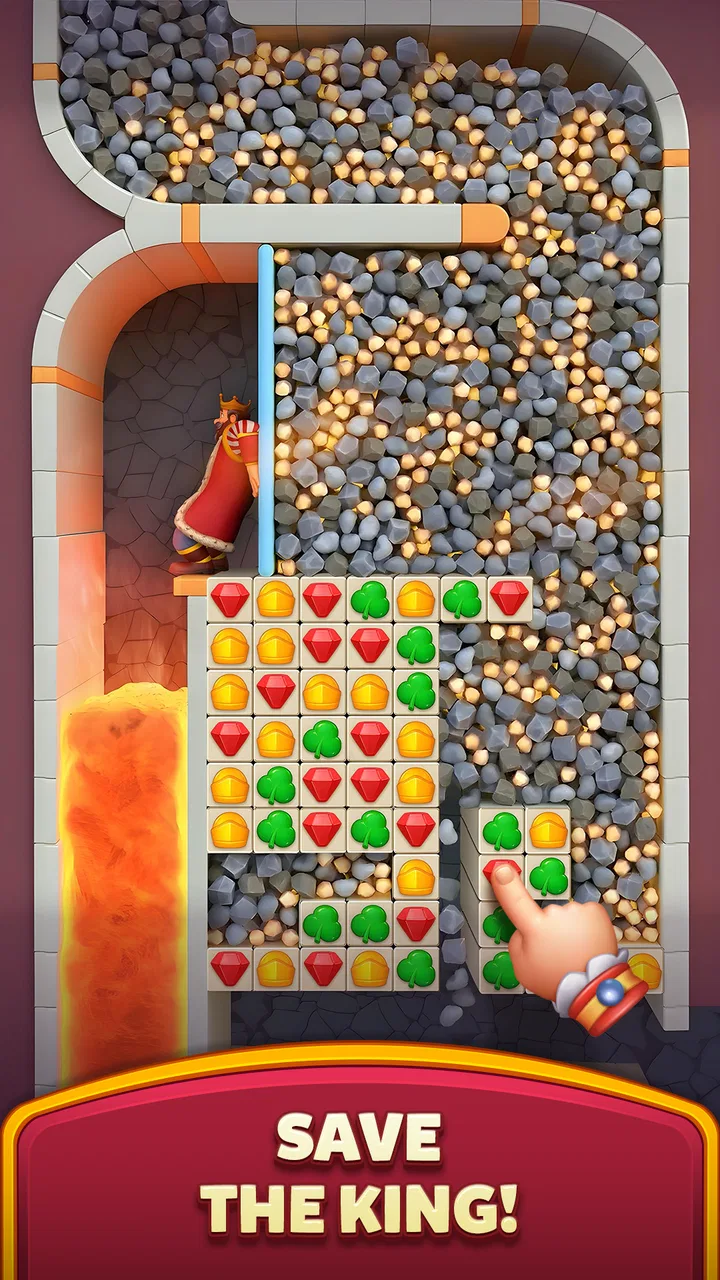
I spent my first sessions with Royal Kingdom expecting a familiar match-three game, and that is exactly where it starts: quick boards, colorful pieces, and short rounds that are easy to understand within minutes. The difference is that Dream Games, Ltd. wraps those puzzles in a royal adventure built around King Richard, giving each completed level a sense of forward movement instead of leaving the game as a disconnected stack of boards. I found it immediately approachable, but the more important question is whether that first burst of charm survives after the novelty wears off.
My short answer is that it can, especially if you enjoy playing in small daily bursts rather than trying to finish a long session in one sitting. It is a free puzzle game for everyone, available on Android devices running Android 7.0 or later, with optional purchases ranging from $0.99 to $99.99 per item. That combination makes it easy to try, but it also means the long-term experience depends on how comfortably you can ignore spending prompts and accept the natural pauses of a free-to-play design.
What the first week feels like
The opening appeal comes from the low barrier to entry. If you have played match-three puzzles before, the basic rhythm feels natural: examine the board, make a match, create a stronger move when possible, and use the result to clear the objective. If you have not played this type of game recently, the early stages are still simple enough to teach through play rather than demanding a manual. I liked that I could pick it up while waiting for an appointment, complete a short challenge, and put it down without needing to remember a complicated control scheme.
You May Also Like

 AccuWeather: Weather Radar
AccuWeather Review: A Quick, Clear Forecast for Everyday Decisions
For everyday plans, the best forecast is the one you can understand quickly. AccuWeather makes rain timing, radar, and local conditions easy to act on, with a few trade-offs.

 Hill Climb Racing
Why Hill Climb Racing Still Turns Crashes Into One More Run
A tiny car, a bumpy hill and one more upgrade: Hill Climb Racing keeps resurfacing because its simple chaos makes every near-miss feel personal.

 AliExpress - Shopping App
AliExpress Makes Global Shopping Feel Personal, but Shoppers Bear the Risk
AliExpress turns a global marketplace into a pocket-sized discovery engine. Its reach is useful, its shopping loop compelling, and its trade-offs easy to miss.

 Lords Mobile: Kingdom Wars
Lords Mobile Is a Kingdom-Building Routine, Not a Quick Match
A case-by-case verdict on the building, battles, device demands, and social commitments that make Lords Mobile rewarding for some players and exhausting for others.

 PDF Scanner app - TapScanner
TapScanner Makes Paperwork Easier to Capture, Check, and Share
TapScanner makes scanning with a phone feel less like a rescue operation and more like a dependable step in getting work done. Its capture tools are useful, though not flawless.

 Block Blast!
 Shows How Much a Puzzle Game Can Leave Out
A quiet grid game shows why puzzle players increasingly value instant clarity, repeatable skill and low-pressure play—and where the genre still needs to catch up.
More From Our News Desk
View All News


The royal setting also gives the early journey more personality than a plain collection of colored tiles. King Richard provides a recognizable reason to keep moving through the adventure, while the changing situations around the kingdom make progress feel more meaningful than simply watching a number increase. I would not describe the story as the main reason to install it, but it helps the first week feel like a campaign rather than an endless exercise.
What stood out to me during those initial sessions was how often the game invites a second attempt. A board may look nearly solved, yet one poorly chosen move can leave an awkward section untouched. That small tension is effective: the rules remain accessible, while the order of your moves starts to matter. I found myself switching from casual tapping to looking for the move that would open the most useful part of the board.
That is also where the game’s first meaningful skill lesson appears. Clearing an obvious group is not always the best choice. Sometimes it is better to delay a match, preserve a useful position, or set up a larger chain. New players can enjoy the immediate matches, but players who think one or two moves ahead will get more satisfaction from the harder boards. The best early habit is to inspect the whole board before making the first move, rather than reacting to the most visible match.
The first week is helped by variety in the puzzle objectives. Even when the central action remains matching, a board can ask you to approach the layout differently. I paid more attention to blocked or difficult areas than I would in a purely score-based puzzle, because the goal was not always simply to remove as many pieces as possible. That shift keeps the familiar formula from feeling completely automatic.
There is a practical advantage here for families and casual players. The Everyone rating makes the game broadly approachable, and the controls do not require fast reflexes or a large amount of free time. A child may enjoy the colors and characters, while an adult can focus on planning and efficient moves. I would still keep purchases in mind if another person uses the device, because free installation and optional spending are separate decisions.
Where the early enjoyment comes from
For me, the strongest first-week loop was the balance between certainty and surprise. I usually understood what the board wanted me to do, but the resulting chain reactions could still change the position in a satisfying way. That makes a successful move feel earned without making every result predictable. The game is at its best when I have a clear objective but several possible routes to reach it.
It also works well as a transition game. I used it in the kind of spare moments when a larger role-playing game would be inconvenient and a competitive online game would demand too much attention. A match-three level gives me a complete activity, not just a few minutes of preparation. That makes the first-week appeal practical rather than purely visual.
Still, the opening hours can create an overly generous impression. Early puzzles are designed to welcome new players, so they do not fully reveal how much patience later progress may require. I would not judge the entire experience from the first few levels. The right test is whether you still enjoy studying the board when the easy chain is no longer obvious.
Whether it earns a place after the novelty fades
Month-to-month value depends on what you want from a puzzle game. If your ideal app is a calm, repeatable routine, Royal Kingdom has a good foundation. I can return for a few boards, use the same basic skills in a new arrangement, and stop before the session becomes a commitment. That makes it more durable than a one-time puzzle collection whose answers can be memorized and exhausted.
On the other hand, it is not the best match for someone who needs constant mechanical reinvention. The central match-three action remains the anchor, so players who quickly tire of arranging pieces will eventually feel the repetition. The royal presentation adds context, but it does not turn the game into a strategy campaign, an adventure game, or a deep narrative role-playing experience. I would choose a different genre if I wanted character development or exploration to carry most of the long-term interest.
The game’s large audience suggests that the format has broad appeal: it has passed 50 million installs and holds a 4.6 average from around 1.5 million ratings. Those figures do not decide whether it suits me, but they do reflect how accessible the basic loop is. I found the appeal easy to understand even when I was not in the mood for a demanding game, which is a useful quality for something intended to become a regular habit.
My month-to-month test is simple: do I have a reason to return when I am not chasing the excitement of a new download? In this case, the answer is usually yes for short sessions, but not necessarily for long ones. The game fits naturally into a daily routine of a few levels. It becomes less attractive when I try to force it into an extended evening, because the repeated board structure starts to feel more apparent.
A useful way to preserve its value is to treat each session as a small puzzle appointment rather than an open-ended marathon. I prefer setting a natural stopping point after a handful of levels, especially when I have already solved a difficult board. That approach keeps the game feeling like a refreshing break instead of another task competing for attention.
How it compares with familiar alternatives
Compared with a basic match-three game that focuses almost entirely on scores, Royal Kingdom gives me more reason to care about the journey. The kingdom setting and King Richard’s adventure create a stronger sense of destination. If I like a little narrative framing around my puzzles, this is more inviting than a board-only alternative.
Compared with a pure logic puzzle, however, it is less about finding one exact solution. The board can reward combinations, timing, and favorable chain reactions, so the experience includes an element of chance alongside planning. That is enjoyable when I want relaxed entertainment, but it may frustrate me if I am looking for a fully deterministic brain teaser where careful reasoning always produces the same result.
It also differs from competitive puzzle games because the main satisfaction is personal progress rather than direct competition. I can play without needing fast reactions or a strong online ranking mindset. For someone who wants pressure, head-to-head matches, or a strict skill ladder, another option would probably offer a better long-term fit.
The most useful comparison is with older match-three habits. Royal Kingdom feels familiar enough that I never had to relearn the genre, yet its royal presentation gives the familiar actions a clearer context. The trade-off is that familiarity can become repetition. Whether that matters depends on whether you value a dependable routine more than constant novelty.
The maintenance burden of keeping it installed
In practical terms, the game is easy to maintain. It is free to install, and the current version is 24409. The minimum operating requirement of Android 7.0 or later also makes it accessible to many older Android devices, although the experience will naturally depend on the individual phone or tablet. I appreciate that I do not need to commit money just to discover whether the puzzle loop suits me.
The greater maintenance burden is behavioral rather than technical. Free puzzle games are easy to open repeatedly, and the short-level structure encourages “just one more” sessions. I found it helpful to decide before playing whether I had time for one board or several. Without that small boundary, a quick break can quietly become a longer interruption, especially after a near-win makes another attempt feel necessary.
Purchases are another part of the long-term calculation. The available in-app items run from $0.99 to $99.99, so the game can remain free if I choose not to buy, but the spending range is significant enough to deserve attention. I would recommend deciding in advance whether purchases are off-limits, occasional conveniences, or part of your regular budget. That is particularly important on a shared device.
I also would not install it for someone who wants a completely uninterrupted puzzle experience with no free-to-play friction. Even when the core game is enjoyable, the surrounding structure can make progress feel less direct than in a paid puzzle title. A paid alternative may be the better choice for a player who prefers to buy once and avoid the psychological pressure of optional boosts or extra spending.
For families, the Everyone rating is reassuring as a broad content classification, but it should not be confused with a spending setting. I would pair the game with the device’s purchase controls and explain clearly that free access can still include paid items. That small bit of preparation prevents a casual game from becoming an unexpected account problem.
Small habits that improve the experience
My first useful tip is to scan for the hardest target before making a move. In many boards, the most visible match is not the part that determines success. I look for the area that will be difficult to reach later and prioritize moves that open it early. This is more reliable than chasing the largest immediate reaction.
Second, I try not to spend every helpful resource as soon as it appears. A powerful option can feel wasted when used merely to clear an easy section. Saving it for a blocked corner, a final stubborn objective, or a board position with several connected targets usually gives it more value. This is one of the clearest differences between casually completing a level and managing a limited opportunity carefully.
Third, I use failed attempts as information rather than immediately repeating the same opening. If the first approach leaves the difficult area untouched, I change the order of my early moves. That small adjustment often teaches me more than simply hoping the next board arrangement will be kinder. It also reduces the temptation to spend just because a previous attempt went badly.
Finally, I stop after a frustrating run instead of treating persistence as automatically productive. Match-three games can make a player overconfident after a near-success, but tired decisions are usually worse decisions. A short break helps me return with a clearer view of the board, and it keeps the game from turning a relaxing habit into a source of irritation.
Where fatigue begins
The main source of fatigue is repetition. The royal theme gives the journey a recognizable identity, but the moment-to-moment action still revolves around matching pieces. If I play for too long, I start seeing the board as a sequence of familiar patterns rather than a fresh problem. This is not a flaw unique to this game, but it is the central limitation anyone considering a long-term installation should understand.
Difficulty can create a second kind of fatigue. A challenging board is satisfying when I can identify a better plan, yet it is less satisfying when success seems to depend mainly on a favorable arrangement. The game works best for me when I feel that careful choices matter. If I repeatedly fail without learning anything useful, the motivation to continue drops quickly.
There is also a difference between progress and enjoyment. Moving forward through an adventure can encourage me to continue, but progress alone cannot replace a puzzle loop that has become stale. I have had sessions where I wanted to see what came next even though I was no longer enjoying every board. That is a sign to take a break, not necessarily evidence that the game has suddenly become poor.
Players who dislike purchase prompts or energy-style interruptions should be especially cautious about making this their only puzzle game. The free-to-play structure is convenient for trying it, but convenience and friction can exist together. I would rather keep a second, simpler puzzle app available than feel pressured to continue when the current session has stopped being fun.
Another limitation is that the game may not satisfy people seeking deep strategic planning. There is room for better move selection and resource timing, but the experience remains designed for accessibility. If you want a puzzle where every turn supports a complex long-range plan, a dedicated logic or tactics game will probably reward you more. Royal Kingdom is better at delivering approachable decisions in short bursts.
My long-term verdict
After the initial excitement fades, Royal Kingdom earns lasting space most convincingly as a compact daily puzzle, not as an all-night game. I like its welcoming controls, its royal adventure framing, and the way a short session can feel complete. The 4.6 average across around 1.5 million ratings and more than 50 million installs matches my impression that the formula is broadly appealing, though popularity does not remove the genre’s familiar repetition.
I would recommend it to someone who wants a free match-three adventure that can be played in small pieces, especially if King Richard’s setting is more appealing than an abstract board. It is also a sensible choice for casual family play because it is rated Everyone and does not demand advanced gaming skills. Just remember that optional purchases can reach $99.99 per item, so I would set spending boundaries before handing the device to a child or another family member.
I would skip it if you want a one-time purchase with no free-to-play considerations, a deeply deterministic logic challenge, or an experience that changes dramatically from session to session. In those cases, a paid puzzle game or a more specialized strategy title would likely offer better long-term satisfaction. I would also avoid making it a default time filler if you are prone to playing much longer than intended.
For me, the deciding factor is maintenance. The game stays worthwhile when I keep sessions short, study the difficult parts of each board, and resist turning every setback into a reason to spend. Used that way, it has enough recurring value to remain installed: familiar enough for effortless entry, but thoughtful enough to reward attention. It does not reinvent match-three puzzles, yet it gives the format a friendly royal journey and a practical place in my everyday downtime.
As a free puzzle game from Dream Games, Ltd., running on Android 7.0 and above, it is easy to try without a financial commitment. My final recommendation is therefore positive but measured: install it if you want an approachable adventure for regular short breaks, and keep it only if the board decisions still feel enjoyable after the first-week glow disappears. That is the real test, and in my experience, Royal Kingdom passes it best when treated as a habit in moderation rather than an endless obligation.
FAQs for Royal Kingdom
01What is the main objective of Royal Kingdom?
Royal Kingdom is a strategy game where players build and manage their own kingdom. The primary objective is to expand your territory, cultivate resources, and form alliances. Engaging in battles, you must defend your kingdom while aiming to conquer others. Strategic decision-making is key to becoming the supreme ruler.
02Is Royal Kingdom free to play?
Yes, Royal Kingdom is free to download and play on both Android and iOS platforms. However, it offers in-app purchases for items and resources that can enhance gameplay. These purchases are optional, so players can enjoy the full experience without spending money, although some features may be accessed more quickly with purchases.
03Does Royal Kingdom require an internet connection?
Royal Kingdom requires a stable internet connection to play. This is because it features real-time multiplayer interactions and updates, which are essential for alliances, battles, and other dynamic gameplay elements. Offline play is not supported, so ensure you're connected to Wi-Fi or have a data plan when playing.
04What age group is Royal Kingdom suitable for?
Royal Kingdom is designed for players aged 12 and above. The game involves strategic planning and combat, which may not be suitable for younger audiences. It includes fantasy violence and strategic elements that require critical thinking, making it more appropriate for teenagers and adults who enjoy strategy games.
05Can I play Royal Kingdom with friends?
Yes, you can play Royal Kingdom with friends by forming alliances. The game encourages social interaction, allowing you to team up to tackle challenges, defend each other’s kingdoms, and strategize together. You can invite friends or join existing alliances to enhance your gaming experience and achieve collective goals.
Pros
- Intuitive user interface for easy navigation.
- Engaging storyline keeps users captivated.
- Regular updates with new challenges.
- Rich graphics enhance the gaming experience.
- Customizable characters add personal touch.
Cons
- In-app purchases can be expensive.
- Occasional app crashes reported.
- Requires constant internet connection.
- Battery consumption is quite high.
- Loading times can be lengthy.

Royal Kingdom
Gallery